

 The Centre Bounce Machine
The big centre bounce is back. Launched straight up from the centre circle, as high as you want, with no umpire in the way.
Scroll
This video didn’t load.
Fig. 1 The prototype. Real footage, September 2026.
The centre restart is one of the AFL’s signature moments. The switch from the bounce to the ball-up made it more consistent, but the ball now goes up lower and everyone can see it coming. The Centre Bounce Machine is a launcher set into the centre circle, built to bring that spectacle back.

This video didn’t load.
01A spectacular start
A spectacular start.
There is no question that the old centre bounce could be spectacular. In the 1993 and 2002 Grand Finals the ball soared high, straight and true, creating an immediate sense of occasion and excitement.

This video didn’t load.
Hang time 2.47 s

This video didn’t load.
Hang time 1.35 s

This video didn’t load.
Hang time 0.60 s
Unfortunately, bounces like these were not guaranteed. Too often the ball went sideways, fell short or simply failed to produce the spectacle everyone wanted. And the new centre ball-up? It simply isn’t in the same league.

This video didn’t load.
Hang time 2.42 s
The Centre Bounce Machine changes that. It can replicate the height and accuracy of the great bounces of 1993 and 2002, every time. No unpredictable bounce. No ball going sideways. No umpire standing in the way. Add dramatic lighting, sound and even smoke, and the opening bounce becomes more than the start of a game. It becomes a spectacular television event.

This video didn’t load.
Hang time ≈ 2.8 s
02Umpire safety
Umpires out of the contest.
The Centre Bounce Machine takes umpires out of the immediate contest. They don’t have to back away, and they no longer become targets for players pushing and manoeuvring for the best position, so umpire safety is immediately improved. With the umpire away from the bounce, players no longer have to avoid areas and the contest is completely clean, allowing those with the best skills to dominate.

This video didn’t load.

This video didn’t load.
In May 2026 the AFL cracked down on umpire contact, starting with centre throw-ups.3
Umpires having a clear path to retreat from the ball-up can mean up to half of the centre circle is off limits to a genuine contest.
The umpires will also be in a better position to award free kicks and will not be concerned about their safety.
03Formula 1 red‑light start
Formula 1 red‑light start.
What makes a Formula 1 start so compelling is that nobody knows exactly when it will happen.

Bringing the same excitement to the AFL
The red lights build the tension. Everyone knows the race is about to start, but not the moment the lights go out, and that small uncertainty creates anticipation, excitement and theatre. With an umpire-controlled ball-up, spectators watch the umpire prepare and know exactly when it is coming, so much of the anticipation is lost. A short, visible randomised start sequence signals the bounce is imminent, then holds for a random 1 to 5 seconds before release. Just like Formula 1, everyone knows it’s about to happen, but not exactly when.
04How it works
Charge. Set. Release. Reset.
A pneumatic launcher sits flush under the turf at the centre circle. The umpire starts it from outside the square at the start of each quarter and after every goal. The hold before release is random, so the start is never quite the same twice.
1Charge
The onboard pressure tank is charged with compressed air. In testing it ran at 6–8 bar.
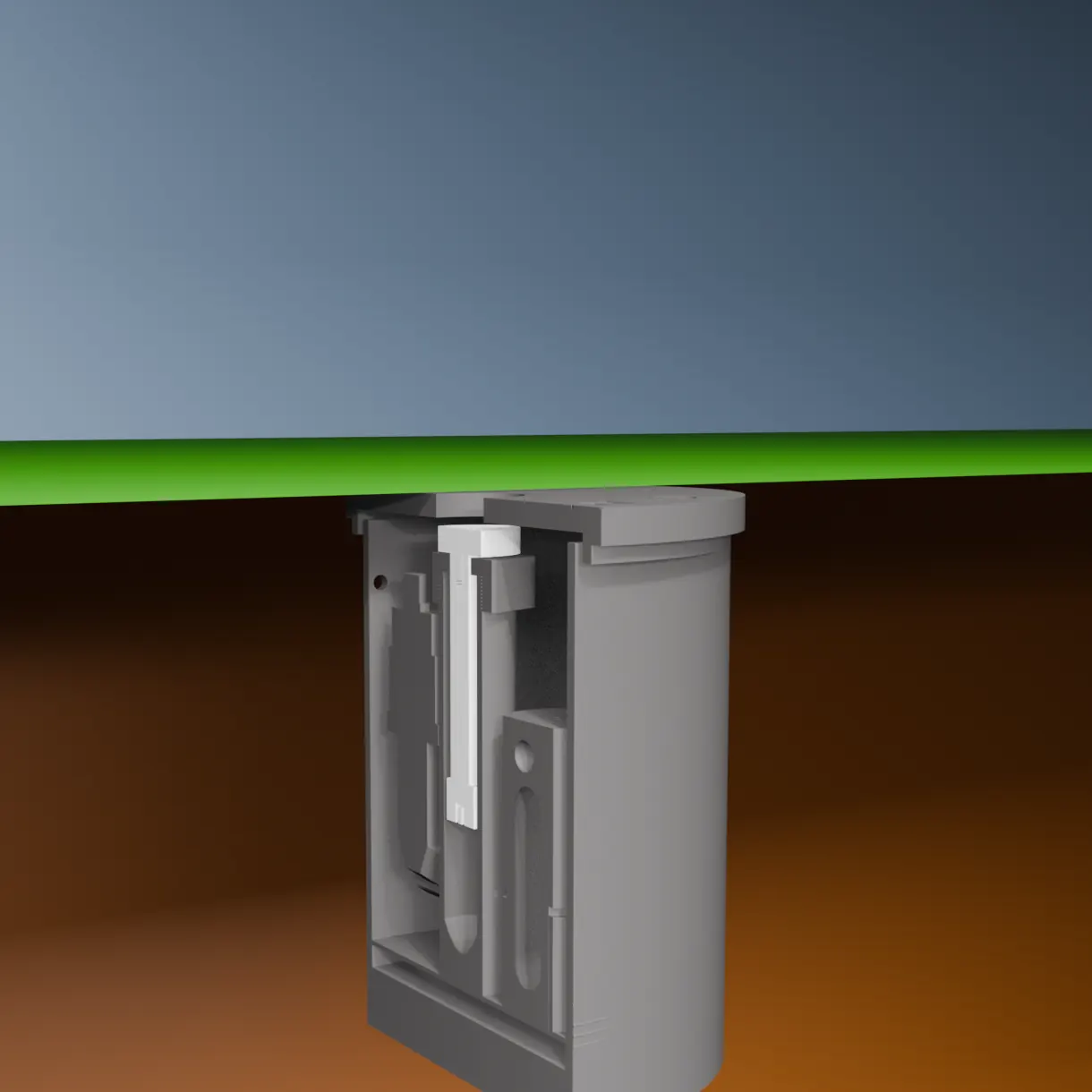
 PistonAngle-seat valveFlush capPressure tank
2Set
The ball sits on a seat flush with the turf. Height-adjustment bolts set the plate level with the surface.
PistonAngle-seat valveFlush capPressure tank3Release
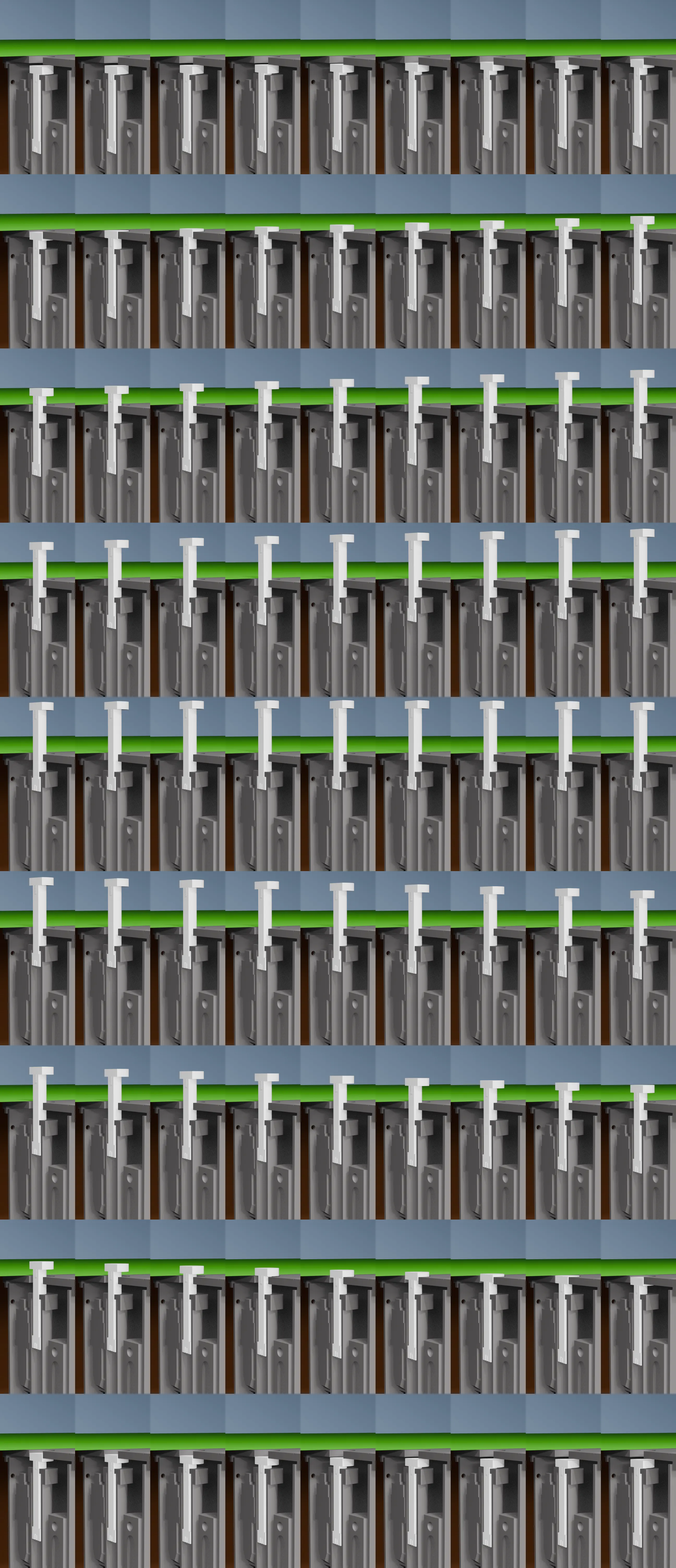
After the start sequence it holds for a random 1–5 seconds. Then a valve dumps the air through the flange connector into the piston, which snaps up and launches the ball vertically.
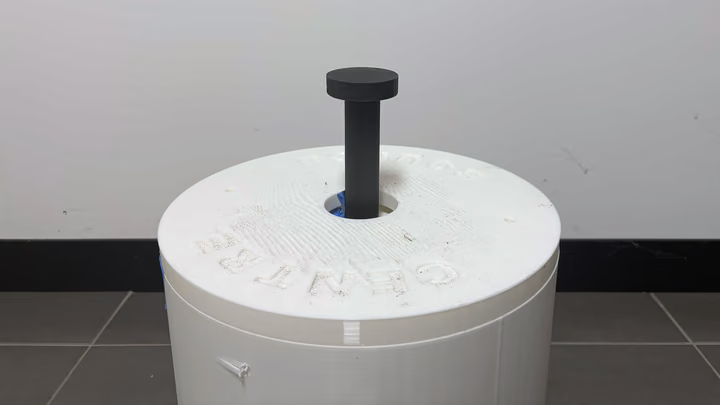
The real ram: the prototype. PistonAngle-seat valveFlush capPressure tank4Reset
The piston retracts and the cap sits flush again, ready for the next goal.
By default each launch varies slightly in height and timing, so no two bounces are quite the same. Or, if preferred, it can go straight up to the same height, without any variation, each and every time.
PistonAngle-seat valveFlush capPressure tank
PistonAngle-seat valveFlush capPressure tankPneumatic · 6–8 bar
Not a step back. A better centre restart, so the game keeps one of its great moments.
It could be trialled at a handful of grounds first, and become a moment the AFL is known for.